Sunday, 23 December 2012

Christmas in New Zealand

Nothing says Christmas to a Canadian like Santa Claus and the reindeer taking to the sky over palm groves, festive beach parties, tank tops and jandals. Thank goodness for the universals of beer and wine, otherwise I’d have lost my bearings completely!


Imagine … it’s a couple of weeks before the big day and the days are getting longer, not shorter, the temperature is rising, fields are bursting with strawberries, asparagus and zucchinis, and sunblock is your best friend. Cozy evenings sweating in front of an open fire, candle-light, threat of snow and mulled wine are but a distant memory for me … and a good thing too. The only reason I’m not lying in a heap of homesickness is because the Kiwi Xmas is, well, totally opposite to Christmas in Southern Ontario.


The most amazing thing about the Holiday Season in NZ is the display put on by the Pohutukawa tree. These sharp, twisted, wizened old witches of trees burst forth with the softest, most exquisite red and yellow flowers around Christmas time. The world is on fire right now with the green and crimson glory known as the “New Zealand Christmas Tree”.

The Pohutukawa "New Zealand Christmas Tree" bloom
At Muriwai Beach
Merry Christmas!
The Kiwi Advent is like none other. Jesus who? It’s all about the countdown to summer holidays, soaking up the sun at the family bach, surfable surf on both coasts, and basically getting loaded on local beer and wine for the duration. That’s why in Aotearoa New Zealand there is a public holiday observed called “The Day After New Year’s Day” on 2 January. In other words, an entire nation of binge-drinkers gets that extra bit of insurance to sleep off “the day after the night before … before”. Imagine a symphony of livers regenerating all up and down the 40ยบ South parallels. Besides, you need time to find your way home after waking up in a random sand dune on 90 Mile Beach, aye!

A unique Auckland holiday tradition is walking up and down Franklin Road in Ponsonby. Franklin Road provides that glimmer of Northern Hemisphere Christmas with a South Pacific twist. The NZ-style "villas" are festooned with Christmas lights and all kinds of stuff from the North like snowmen and reindeer and Santas, and even fake snow. So cute! Especially given that it's light until after 9pm. Save on the power bill, yo!
A  very Franklin Road Christmas
"I saw three ships come sailing in" ... to Waitemata Harbour
I don't know about you, but this makes me feel right at home!
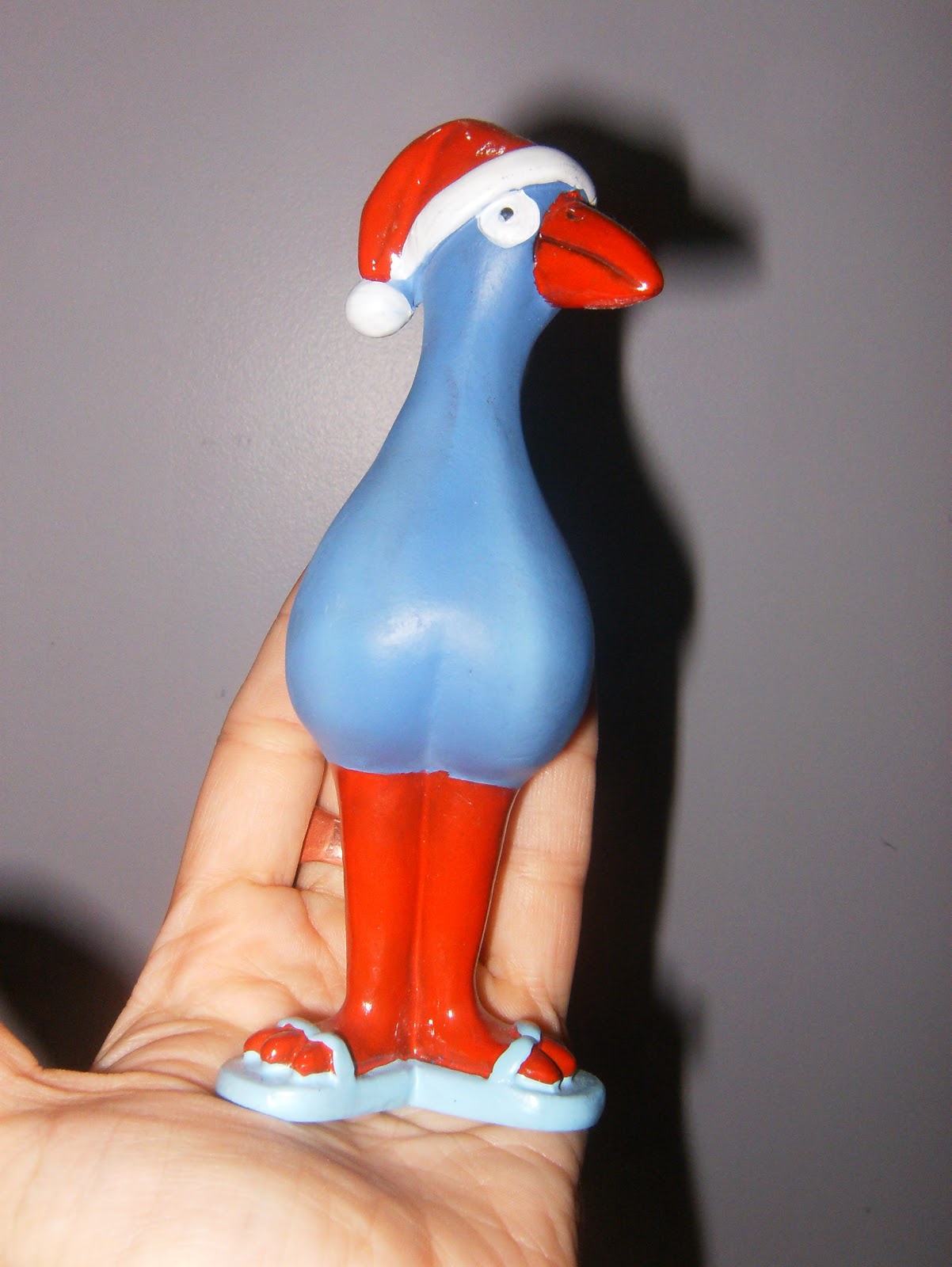
I managed to find some real Kiwiana Christmas ornaments to get me into the spirit. I went to the dread Warehouse (NZ's Wal-Mart) where I got myself a SURFING SANTA SNOW-GLOBE, a SURFING SANTA STOCKING, a JANDAL and SANTA-HAT WEARING PUKEKO (NZ swamp-hen), and a totally PACIFIC SANTA complete with board-shorts and Hawai'ian shirt.
"Surf's up, bro!"
The kids are in for a big surprise this year!
Not an alternative to turkey.
Have jandals, will travel.

It's now Christmas Eve, babe, and I'm hoping I don't end up in the drunk tank. I'm off to a summer Christmas BBQ on "the Shore" (not the Jersey Shore, Auckland's North Shore). Later on I'll be at St. Patrick's Cathedral for the Midnight Mass, and I'm REALLY HOPING that that will get me into the Xmas spirit. Because you can take the girl out of Canada, but you sure as hell can't take the winter Christmas out of her. But this morning, as I was stirring the custard and baking sponge cakes in preparation for the WORLD'S MOST EXPENSIVE TRIFLE, made with the proper ingredients my Canadian family would expect, I was in a little sundress and a Santa hat singing Silver Bells by Anne Murray. That kinda did it for me ... a little. Pictures to follow in my post-Christmas 2012 wrap-up, coming soon!

Anyway, you can get the full impact of just how wacky and bizarre Christmas in New Zealand is for me by taking a "squizz" at this McDonald's Australia ad, which doubles as a McDonald's NZ ad. You know how every McDonald's in the Northern Hemisphere says, "NO SHIRT, NO SHOES, NO SERVICE"? Well that ain't the way it's done down here, winter or summer. Merry half-naked, sun-tanned, surf's up, BBQ drunkfest Antipodean Christmas, everyone! No scratchy woollen snowman sweaters live here!


(and yes, at the very end, the old lady says "Oh bugger!")


Friday, 19 October 2012

Revenge of the Natives

The following work of fiction was inspired by two things: the desperation one feels in one's bones after nearly a solid year of winter, and an identification with the narrative and analyses of the most excellent academic history ever written -- Professor Susan J. Matt's Homesickness: An American History (2011). 

I've basically been living out of a bag for the last 6 years, and in the last 20 years I have not spent a continuous year in one country. In fact, this 7 months spent in NZ is the longest I have spent at one go in one country in ... well yeah.

No matter how good you have it in an adopted country ... town ... city ... neighbourhood, homesickness can be a huge issue. Despite your bravery, courage, luxury, ease, and preparedness, you still may suffer from what a physician -- up until the mid-twentieth century -- would clinically describe as "nostalgia". Literally, "home pain".

The prevailing attitude towards homesickness and its effects is that one should "suck it up" and "get on with it". You big baby! North Americans, who have a huge, almost pathological ethos of "onwards and upwards", are the grand purveyors of this attitude. I was a grand purveyor of this attitude. After all, we have a 400-odd year history of extreme individual mobility. It's in our DNA.

But the reality is that this attitude has a history (a traceable and very recent history), and it's at total odds with how homesickness was viewed and handled in the past.

Which is why Professor Matt can say with confidence that even the new globalist is homesick.

When I lived in Amsterdam, I spent a good amount of time beating myself up for my "inability" and "failure" to adapt to my immediate environment, despite the fact that I tried everything possible to get down with the locals, to find enjoyment, to belong. I called upon all of my past travelling experience in order to make a go of it. But I wasn't travelling. The reason I moved to Amsterdam was for a job. Onwards and upwards! It was going to be the most awesome job ever! It turned out to be the worst situation I've ever encountered, and nothing I did could right it. On top of that, I moved -- only once by choice -- four times in the space of a year within the city. The weather was horrible, the landscape dismal, the culture unbearable, and intolerance and racism ruled. Even the food was terrible. The only expats who seemed to be loving it were in couples, owned their own property, had permanent jobs, and plenty of cash. If it weren't for the few friends that I worked my ass off to find, I would have shrivelled up and died. The sense of dislocation -- of impermanence -- of peregrinatory exile -- was unbearable. 

What I realise now, and realise even more strongly as a result of reading Professor Matt's book, is that, at the end of the day, sometimes you're just in the wrong environment. That's no crime. It doesn't make you immature or tied to your mother's apron strings. More importantly, YOU'RE NOT ALONE. And even if you choose to go live in your dream location ... it may not feel like home for a very, very long time .

And so, without further adieu, a fiction born of the emotional vortex that is HOME.

REVENGE OF THE NATIVES

 This slow, interminable Spring, which does not feel like Spring, but a slight confusion.
Of past times, and memories, and faraway places. Foreign dreams and nostalgia come to life suddenly because programmed to do so by their origin in distant climes. A beauty to which I am naturally attached: the diaphanous, tender, intricately veined leaves of the deciduous burst forth and begin their impercebtible maturation and hardening off. At home, so far away, they start such a brilliant green and dull with age and chlorophyll to their green green and seem, even until the very last, invincible. But they will be vanquished by dark and chill and a slowing in the sap. And then the great explosion of colour. I once heard that the autumn is when their true selves emerge: red, orange, yellow, brown, maroon. The blaze of the sumac. Fire in the forest. And when spring comes again, I revel in the liquid sweetness of the maple.
Here, against the sharp, concrete, evergreen natives, these foreign deciduous seem a yellowish, weak green, and hardly able to fend for themselves. The natives are hung with knives and spears and pikes. Sentinels armed to the teeth. Some are grey-green, some are black-green, some are olive-green. Some are thick and juicy. Some are razor-blades. They do not swish and whisper and stir, but thwack and rattle or stand immobile as great branches sway in the wind. They sift through the wind, magnifying its sound until the whole world seems to be ringing out with it, as though beaten by the wake of the four horsemen descending from heaven. They are the transmitters of whole raging seas, and their scaffolds. The waxy, stiff rigidity of the natives is set against the ephemeral, vivacious curves of the oak, the lattice-work of liquid amber, the whimsical flickering of the poplar, last messages from a world now unknown.
            It is another morning in the anitpodean spring. It is another morning of dampness and stubborn chill. Another morning of wind and cloud. Another morning that makes me crave the heat of my homeland, makes me nostalgic for Southern Ontario, makes me long for hot, humid summers and the delicious, distinct smells of four seasons. On this morning I would chop down every pohutukawa tree in sight. I would build a bridge to home and I would see again the steam of August heat rising up from rows of corn. I would see the baking dust of a July field and swollen fruits and vegetables rioting in the sandy soil. I would have the deep, wet whirring and buzzing of the riverbanks, marshes, and meadows under a full, close, and pregnant sun. I would put on the hot womb of this world like a second skin and dive into heat shimmers, and eat of the humid air, and commiserate with the plaintive cry of the tree toad as I oozed away into the thickness of heat.
            I am so nostalgic—in my very bones—for the Southern Ontario spring and summer, my seasons, my landscape, my environment, that I would chop down every rimu in sight and build a canoe. I would race it northernward to home, and I would not sacrifice the call of the robin in May, nor the heat of June at 6am, the coating of sweat, the indolence of humidity, and the rolling of the summer storms towards their clamour in valleys of fire. As the forests would droop and sway, I, and all other mammals, would trust in their efforts to survive. Close to the floor, the bed of pine needles, the swatting of blackflies and mosquitoes. In the clearing, the horsefly in the middle of my forehead, death to the horsefly as I dive into the lake, death to the horsefly again as he makes his endless return to the middle of my forehead, I dive and I dive and the cool, freshwater is a jewel of suspension fizzing in the melting heat. Hear the lapping at the shore, a wayward leaf flutters and lands on the surface, the waterspiders skid around it, the tigerlily reaches skyward, the willow dips, the rocks hiss and crack, my skins still smells of dust and sweat, and now maybe a little like fish, loons, ducks, turtles, frogs, otters, and beavers.
            Here: damp. Chill. Wind. Endless wind. Ever-present clouds at low ceiling. Change and change again while yet the natives ceaselessly carry on. A challenge, perhaps. The short and sharp thwacking of native leaves and fronds in the unending wind. Like daggers to the soul. My head on a pike. Short and sharp the day. Here be cold and damp for me to rest my nostalgic misery on. The hands that never warm up, the house that never heats up, the only relief physical labour out-of-doors to keep the body from seizing up and declaring “it” all over. A temperate maritime prison. This spring.
            Even in the summer, it is never too hot here. Never hot enough at night to wear your t-shirt and nothing else. Never hot enough to make you sweat in your strappy dress on the patio of a good restaurant at 11pm. Here, in the summer, we open up all the windows and doors with no screens so that we are almost living under a corrugated iron tarp. The outside comes in. It is wonderful. But then, at night, the windows and doors are all shut up against mosquitoes, there is no air at all, everyone complains, “it’s too hot to sleep”. Were we to have screens here we would be burrowed under blankets against the breeze and the damp. They do not know why we have screens in Southern Ontario. They do not know the true meaning of “too hot to sleep”.
            Oh that my bones could feel 30 degrees celsius again, trying to sleep. Windows open, outside air stagnant, fans on, icecubes, wet cloth over my face, my chest, my shoulders, flipping my pillow, sleeping on top of the sheets in a sundress, fabric placed between my thighs to stop them sticking together, it is so hot I have disintegrated, God could take me now because I am already in hell and then I realise, “this too shall pass”, and I fall into a deep sweaty sleep to be awakened by the first bird at 4:30am. “Oh shut up, bird! I will kill you!” And then the orb of dawn, the lid of the rice-cooker is orange and colours the whole world orange. I am on the lookout for the storm: “Red sky in morning, sailors take warning”. The lid of the rice-cooker takes in the City of Toronto and all its suburbs, the City of Pickering and all of Oshawa, the entirety of Lake Ontario and the Thousand Islands and all the way to Quebec, all the bullrushes, the furry mammals, the dew drippping blades of grass and exhausted flowers. The lid of the rice-cooker is pressed down and by 6am the low spreading glow is over all. It is not short, sharp, and stabbing. It is not the clear, clean blade of white laser like the New Zealand sun. It is a growing, golden stain, an arced heat-lamp, the lid of the rice-cooker is illuminated and glowing and it pulls me out of bed into desperate shade where even still it is 30 degrees celsius and I am puffing up and taking on water and sweating, a grain of rice fattened in the sun who will never eat but iceberg lettuce again. I can’t even breathe.
            But there—under that maple tree, its delicate, soft, green leaves tinkling in the light, dappling me as the hands of Manet with yellow and less yellow and a dollop of orange, a circle of protection, there I have learned to extract cool from even the slightest puff of breeze. There I can ooze away with dignity, believing I am loved and cooled, and not stabbed and throttled by pohutukawa and palm trees and laser beams. Selfish, scraggy pohutukawa, surviving with no care for me, surviving in the battering wind, the salt spray, the army of sun. The army of sun which marches into the very marrow of my bones and sets off nuclear bombs. It fries my skin from the inside out, meanwhile the wind is a cruel conspirator who hides the bomb attack in layers of annoying goosebumps all over my body. Shivering and burning up at the same time. It’s like having a fever.
            Pohutukawa does not care. He laughs in his bony, twisted, unrelenting way. He promises shade that proves to be conniving and rootless. He presents a maze of patches on the ground that leave me otherwise exposed to the elements. He chafes me and scratches me with the points of his hideous, taunting leaves. Pohutukawa says, “Ha ha! I will survive!”, while the white glare of the New Zealand sun bounces off the shiny leaves of his friends and blinds me silly.
            I trip. I fall. Over a cliff, into the booming white water below. I am raked over a rocky reef, shipwrecked, sodden in the salty sea, swirling and tumbling and battered around by wave after wave. I come up for air, bloody, disorentated, gasping. I raise up my arms. “Help!” I yell helplessly into the wind. It smacks me right in the face.
Pohutukawa, clinging to the edge of this precipice for 200 years, looks down and laughs heartily at me. He says, “Told you so!”


Saturday, 1 September 2012

L.L.W.C. Signage ... The Real Kiwiana Part 2

Welcome to another edition of The Real Kiwiana (RK). Today's topic is ... SIGNAGE!

These pix have been gathered by me over my travels in the North Island over the past 6 months. Did you know there are entire departments, institutes, and work-groups -- even university courses -- devoted to the study and making of superior, transparent, culturally transcendent signage? Why? Because it is a crucial part of communication. Gestural, verbal, visual, instantaneous. Holonic. Or whatever. Anyway, these signs are the best postcards of New Zealand going, and may serve as fantastic prototypes for people interested in having a career in signage and/or communication. These struck my fancy and I thought they deserved some broadcasting.

Exhibit 1: Toilet smear campaign


The toilet thief caper: Public Toilets, Colville, Coromandel Peninsula


Exhibit 2: Tunnel directions for Noah's Ark through Middle Earth

Inexplicable infrastructural information, Wellington tunnel.


Exhibit 3: Kinipela's paternal legacy 

Daddy Love/Love Daddy Town, Coromandel Peninsula


Exhibit 4: Beware the Flightless Chicken

Somewhere in Northland ...


Exhibit 5: Taihape boasts a corrugated iron gumboot. Oakune has a giant carrot. Taumaranui is the place you go to bottom out. Dargaville is NZ's "Kumara Capital". Get out your peelers!


Exhibit 6: Once I was asked "What if it [life, love, New Zealand] goes bad?". Well if I end up in Te Kuiti, "Shearing Capital of the World", you'll know!

With apologies to the good people of Te Kuiti.
Don't worry, I'm embarrassed for you.


Exhibit 7: One of the best uses of cut-away lettering and iron ever!

"Fire and the Land" display on a hill near Cape Reinga, Northland.
Yes, that is real land as captured through the sign. Letters as frames for the environment.


Exhibit 8: Cape Reinga, the Middle of Everywhere

Situation critical: Vancouver is double the distance from NZ to Antarctica. Eek!


Exhibits 9a, b, and c: So, this probably is not the road to the fabled "The Bluff" surf spot on 90 Mile Beach. Just a deserted place with no mobile reception where I have a high likelihood of getting killed. Nice.


Northland forestry road, Te Kao. I paid a "gold coin" to get into this mess! REFUND!
Theoretically true.
 If I had persisted beyond the killer wild horses and stuff, I would have reached the Tasman.


Exhibit 10: Scottish Inventory and The Floating Kiwi Apostrophe

Goes well with the fish n' chip's, and the womens's wear.


Exhibit 11: NO SMELLY FOOD! WE OWN THIS KITCHEN!

Fish: The Other Smelly Food.


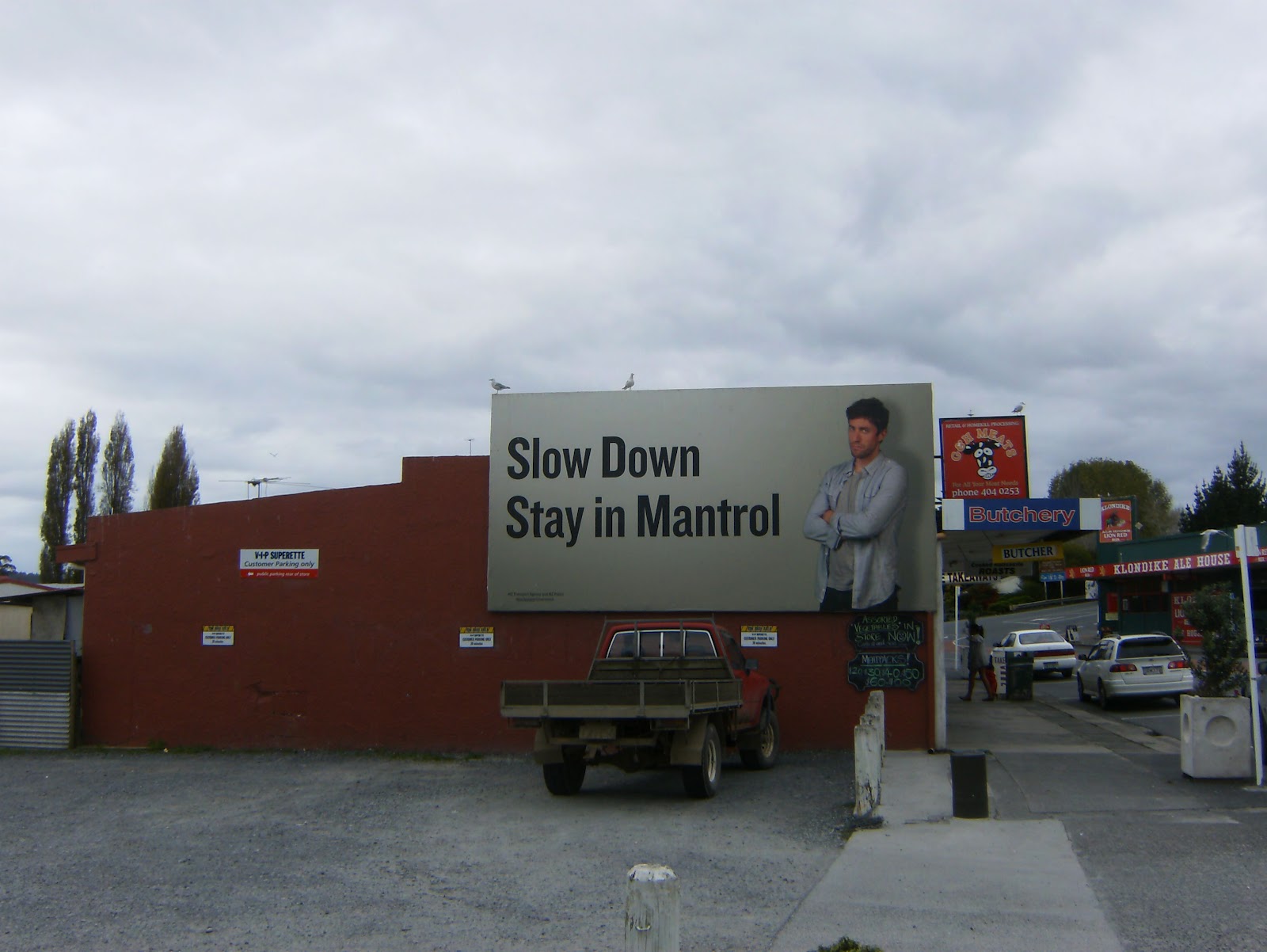
Exhibit 12: Mantrol(l): Kawakawa, Northland.

I assume this billboard refers to driving speed.
But it could refer to something else.
Like thinking of old nuns or your mother at the crucial moment.
Know what I mean?


Exhibit 13: "Homekill Month". WTF?! I left town as quickly as I could!

Kawakawa, Northland.


Exhibit 14: Newfies of the South

Towai Hotel, Towai, Northland.


Exhibit 15: Issues in Dargaville


Exhibit 16: No Mucking Around!

No shirt no shoes: service. Dirty gumboots: no service. Towai, Northland.


Exhibit 17: Sign of a great surf day!

Kinipela, Somewhere on the Tutukaka Coast.


Social Signs: A Parting Note Regarding Culture and Communication in Select Nations of the Former Commonwealth 

You know how when Canadians say things like, "we should get together sometime", it's really a hugely elaborate social ritual that (among Canadians) really means, "I'd like the opportunity to perhaps make contact with you again to see if, in fact, you are the kind of person I would theoretically like to invite into my house to spend more time with me in my private space and I will judge by your response to this probe just how much you actually may or may not be potentially compatible with me and my private space known as my home and after we have gone through this ritual for the next five meetings in public spaces, I will know if, indeed, you should come to my house for further social contact and at that point I will be well satisfied that we are possibly more than passing acquaintances and even maybe friends"? Well, when Kiwis say, "drop in for a coffee sometime" to a complete stranger, it's code for: "drop in for a coffee sometime". Nuff said.


Sunday, 12 August 2012

Kauri Dieback: literal disease, social metaphor, and the lessons of Northland

Literal Disease

The kauri tree (agathis australis) is native to the northernmost regions of the North Island, including the Coromandel Peninsula, Auckland region, and Northland. The kauri was once at the heart of a huge timber and gum industry. During the first wave of European settlement in New Zealand, kauri trees were felled at an incredible rate for export overseas and for domestic use. They were primarily used in building construction and ship building.
The kauri tree, or agathis australis, a northern North Island native.
Kauri gum was used by Europeans to make materials like linoleum, varnish, marine glue, and could be used as a fire-starter. It was also used to make decorative items. Such was the reputation of the kauri that my great-great grandfather, William Napier, a Northern Irish forester, came to New Zealand not so much to visit two of his daughters who moved there, but to gape and gawk at the improbably huge and ancient kauris in the dying days of the industry. During my trips to Northland and the Coromandel Peninsula, I walked in his footsteps through kauri forests, absolutely staggered by their immense trunks of flaking bark and oddly delicate, spreading crowns of green, with elegant leaves and twisting branches reaching skyward.
Mystical and glorious crown of the kauri.
The kauris were all but decimated through intensive logging throughout the latter half of the nineteenth century and the early years of the twentieth century, and the native bush was irreparably altered through rudimentary forestry practices.
"Damn big bloody tree, Gavin, what!"
"Yes, yes, Bruce, chop it down I say, capital, capital! HM's Navy is in for a treat!" 
When the viability of the kauri industry waned due to diminishing resources, northern settlers turned to agriculture, and almost simultaneous with their conception in the late 1920s, the first CAT tractor arrived, changing the landscape of the northern North Island for all time. Kauri trees are not suitable for sustainable forestry because of their incredibly slow growth rate. It takes hundreds of years for a Kauri to mature and reach its grand stature. Only a few Kauri stands are left in protected forest parks and in selected zones, as for example in the Waipoua Forest, the Trounson Kauri Park, and in the Coromandel. Tane Mahuta, or the Lord of the Forest, in the Waipoua Forest along the Kauri Coast, is certainly the most famous of the standing kauris due to its age and size. At over a millenium old, Tane Mahuta is a staggering salute to the efforts of Mother Nature in the southern hemisphere.

Tane Mahuta.
Yours truly on a sparring date with the Lord of the Forest.
A trip to the Kauri Museum in Matakohe reveals the depth of importance the kauri had in the early New Zealand economy, and the lengths that the early colonial settlers went to in exploiting the resource. Extreme hardship often accompanied the life of the "gumdigger" and the lumberjack, whose life in the New Zealand bush was far less comfortable than that of his counterpart in the Canadian forests during the same period. In addition to logging, kauris were "bled" for their sap like a maple tree, but this was extracted at a huge and at first unknown cost. The tapped kauri, unlike the maple tree, certainly died of its wounds. After a time, this method was played out and fortune-hunters moved on to gumdigging: looking for lumps of kauri gum in the soil. This was not the work of the well-to-do, or by all accounts, the well-adjusted. Had you bottomed out in every other respect in your bid to settle in early colonial New Zealand, you might go off and become a gumdigger, who, like the California gold-digger, was high on chance and often low on fortune. Eventually the gum industry subsided.

The kauri tree has been reinvented as an important aspect of the New Zealand economy, providing revenue to the northern region through tourism, and kauri woodworking and carpentry. The kauri wood used for craft activities is reclaimed from the land. It's called "swamp kauri", and is rescued from still-extensive deposits underground and in mudflats. Gum, still found in moderate quantities, is made into jewellery and other decorative items.

In 2008 Kauri dieback appeared. It is a fungal disease killing off kauris. The race is on to control the spread of the disease before it destroys what kauris remain. Despite the massive size of the kauri, the strength of its wood, and its seeming impenetrability, its roots are so shallow and so vulnerable at soil-level that even a passer-by with infected soil or spores clinging to his shoes can be a messenger of doom for a forest of trees. The Department of Conservation has therefore set up stations for cleaning shoes and boots at the entrance of the Waipoua Kauri Forest and the Trounson Kauri Park. Kiwis and tourists alike are dutifully spraying their shoes and carefully keeping to the path in order to preserve the majestic trees and their precarious but flourishing root systems.

A different kind of spray n' wipe.

Social Metaphor 

2008/9 was also the start of New Zealand suffering a kind of "dieback" disease of its own. The widening gulf between rich and poor in NZ, kick-started in the 1980s, became radically entrenched over the years and has increased in the period beginning with the economic crisis of 2009. Poverty is on the rise. It is a struggle for most families to make ends meet, and for those who are unable to secure full-time employment or high-paying jobs, the prospects are bleak. 

New Zealand is in the top four of the most inequitable societies in the world based on income in relation to health and social issues. For a country of only four million people spread over a land mass the size of the United Kingdom, it does not take much hard work to realise that mismanagement and misallocation of available resources, a lack of infrastructure, poor urban planning, incoherent social and economic policies, and uneven wealth distribution (including property ownership) is to blame. New Zealand's delicate roots, very much exposed, are being destroyed.

 If self-righteous, moralizing finger-pointing were a competitive sport, New Zealanders would win hands-down. Recent government initiatives and public attitude would suggest that the poor in New Zealand are to be blamed for the lion's share of the country's social ills, and are blamed for not "pulling themselves up by their bootstraps" the way white, middle and upper class New Zealanders have done for generations. These same Kiwis, living quite comfortably by most international standards, have a bad habit of crying poor -- another national pastime, and one of the least attractive aspects of the New Zealand (white) national character. Where do the complaints of these Kiwis leave the genuine poor and struggling? Caught up in suspicion and marginalized.

In New Zealand, there is little recognition that poverty and poverty cycles come about because of a lack of resources, lack of access to resources, and lack of social equality. Many well-to-do Kiwis have serious blinders on where it concerns their down-at-heel countrymen. They truly believe, in 2012, that all these people need to do is go out and get a job. Any job. Well if you can't afford to run a car or a mobile (smart) phone, do not have the tertiary education now demanded to answer phones and file papers, and live in a city like Auckland, getting a minimum wage, part-time job will barely stretch to your bus fare, let alone the staggering rent on housing and the cost of food. 

Not long ago I caught a talk show on the radio. A debate was raging (or as raging as a debate can possibly get among Kiwis) on a proposed government initiative to "suggest" women on the "DPB" (a single-parent government benefit) take contraceptives as a way to reduce welfare dependency. The supporting logic had to do with stopping women having kids just so they could go on the benefit. And what? Make their millions? Life the high life? To my mind there seemed to be major holes in that logic, and the proposal it inspired.

Ineptocracy:
 describing the unspoken socio-political leanings of most white , middle-class, fully employed Aucklanders.
Ironically, I've heard the argument many times now, from white, middle-class Aucklanders with steady, well-paid jobs, that the solution to the problem of NZ's precarious economy is to get more population. Of the right sort, no doubt. The supporting logic has to do with a vague understanding of American-style consumerism and the idea of "markets". They believe that lots of people means lots of money--a post-capitalist abstraction to be sure. This manner of thinking is also part of the post-colonial hangover in NZ. The Kiwi media and the Kiwi government continually compare the New Zealand economy with those of the USA, the UK and Australia, as if there were any (even superficial) basis for the comparison, and hold New Zealand and New Zealanders up to impossible standards. Surely Ireland or Norway would provide better comparatives based on population, and better examples could be found by looking at nations that better fit the profile of New Zealand with respect to environment and resources. There is something not only ironic but flat out hilarious in taking the WASPiest markets in the world and saying, "oh yeah, we should be like them!" while taking smug pride in not being American or British or Australian. (Canada obviously remains the Great White Unknown.)

Mismanagement of "human capital" -- let alone cash -- is one of the most confounding hallmarks of the "New New Zealand". New Zealand is already struggling to make use of its immigrants to generate economic results. Or to use their skills for anything other than shop-keeping and bakeries. New Zealand is failing to deal with the four million people it already has. Imagine eight million.

In the absence of a resource base to support all these extra people, a manufacturing base, appropriate infrastructure, places for them to ply their trades outside of a few neighbourhoods in Auckland, a way to invest and spend the money they're theoretically bringing, and jobs with which to make the money they're going to spend on Gavin and Bruce's overpriced knick-knacks to stimulate the dream economy, that plan isn't really going to fly. One guy enthusiastically remarked to me that the UK is the same size as NZ and despite having a population of just under 63 million, "you don't feel crowded in the English countryside". That's ok reasoning, I guess, if you're on holiday at a farmstay B&B or manor home and willing to overlook the UK's own social justice issues or the roots of the idyllic English countryside in late 18th century inner-city workhouses. Incidentally, the UK ranks third among the most inequitable countries in the world with respect to income measured against health and social issues.

Is it not possible for New Zealand to stand on its own two feet? Reinvigorating NZ self-reliance, getting down with the virtues of subsistence, and refusing to keep up with the Joneses would go a long way to the long-term economic health of NZ. As would recognizing the fact it's 2012, distance is a thing of the past, and the "human capital" is already here for "exploitation" as one of New Zealand's best and most viable resources. But New Zealanders resolutely fail to invest where investment is needed, love a bargain because they're normally so busy ripping each other off, and blame any adverse outcome on being so far away, the intractability of the poor, and the "global recession". Even the richest New Zealander would rather live in a house that makes his family ill every winter than fix it up to good standards ... and the poor can eat cake.

At least one socially aware entrepreneur of another kind is giving a boot in the face to such worn-out attitudes: Guy Bibby. Visit AskShareGive and see what I mean.

His economy supports and is driven by social roles for people. He's growing and protecting the roots.

The Lessons of Northland


I travelled Northland for over a month. It reminded me somewhat of the East Coast, particularly East Cape. The ravages of economic depression were obvious. The image of Northland promoted by Aucklanders, particularly the white, middle class sort, is of a dangerous and threatening place, "dark" with Maori, and full of "bludgers" who "don't want to work". The reality is quite different. It is a place that has suffered from the progressive dismantling of local industries, transport infrastructure, and the relocation of industrial and business interests to Auckland.

Sensationalist photojournalistic documentation of a derelict homestead, Northland.
Everywhere I went in Northland, I asked people: What is your vision for Northland? What would you like to see happen here? Hands down the response was to bring back local industries, train lines, and ports. What I saw was the same as I have seen in East Cape and in Auckland for that matter: people who are materially and spiritually diminished because they do not have roles. And I do not mean "roles" as in the euphemistic, HR, business-speak substitute for the word "job". I mean they do not have social roles. They lack a meaningful way to contribute to and to gain a sense of meaning in their own communities. Communities are dying, families are becoming fragmented, and wealth is being dissipated because individuals are forced to move to Auckland (or large towns) if they want to make a go of it in the way New Zealand is currently evolving. As the owner of the Houhora Tavern said, "What are we going to do when the current crop of pine trees is all gone and there's no other industry, and everything has moved to Auckland? Rely on tourism?".

Tourism alone will not sustain Northland (or New Zealand for that matter), nor will turning it into one massive retirement or bach zone for rich Aucklanders and foreigners with a lot of cash to spend on flashy beach homes. SMEs (Small-to-Medium-Enterprises) will not save Northland, because SMEs by their very nature are, in NZ, bids for survival rather than entrepreneurial concerns embracing the latest business practices (of which there is little in NZ anyway).

There is money to be made where you least expect it in Northland.
The people of Northland are survival experts. They are jacks and jills of all trades who, like many in rural New Zealand, will do bits and pieces of anything and everything to get by. They don't have extreme ambitions, except to live life and be well within their families, with proper shelter, food, and clothing. However, these ambitions are beginning to look like dreams, if not fantasies, in a New Zealand that is moving forward with a firm sense of denial as to the possibilities of the twenty-first century, and locked into an American way of doing the Antipodes.

Places like Towai, Hikurangi, and Kawakawa epitomize the problems of rural New Zealand. Towai is essentially a parking lot with a Hotel on the west side of  State Highway 1 towards Cape Reinga. I found it, because having skipped out Northland's interior on my quest for surfable coastline, I felt duty-bound to visit Hikurangi and Kawakawa. Hikurangi was one of the most depressing places I've ever been in NZ. Perhaps rivalled by Tokumaru Bay in East Cape. From what I was told in the Towai tavern by a farmer who owns most of the surrounding land and who drank 3 big bottles of Lion Red in the time it took me to drink a handle of some swill or other, Hikurangi suffered from the Hwy 1 bypass, and the removal of a dairy plant to Auckland. Dairy processing was the major sustaining industry of the town after coal mining bit the dust, and now one can only reach Hikurangi directly from places like Whananaki, the Bay of Islands, and the Tutakaka Coast. Towai, like many struggling Northland areas, suffered closure of the local school and is now a blip on what is rapidly becoming nothing but the tourist road north. In an interesting twist, my farmer pal revealed to me that it was his grandfather's CAT tractor on display in the Kauri museum at Matakohe. His son is at university doing film studies ... but expects to return to the farm.

An education in tractors, motorbikes, and Lion Red by Farmer J.
Kawakawa had a more populous but no less depressing cast, having little to recommend it but a ridiculous set of public toilets made by a nutty Austrian architect. Actually, they're quite funky but it's insane to build a local economy from hopes that tourists will be busting for a pee on the way to Cape Reinga. The real story of Kawakawa lies beneath the streets and on the small gauge train that plies the old railway line from Kawakawa to Opuna. Kawakawa is a defunct coal-mining town and the train used to take the coal up to Opuna for wider distribution. The train is now operating as a tourist attraction, lovingly refurbished and run by a couple who want to see the train once again reach Opuna.


Taumarere ... another stop on the small-gauge track to nowhere
The lovely Kawakawa countryside. "Look Ma, no people! Just like England!"
For me, the real lessons of Northland have to do with maintaining the integrity of communities, families, care of the land, and roles for people that make sense for their environment and a way of life that is different, if for no other reason than because this life is being lived in the roaring 40s in the middle of the Pacific Ocean. School schedules and work days don't need to run on stereotypical time-schedules. New Zealand companies have an awesome opportunity to think outside the box when making growth decisions: they have an available labour force but a telecommute away. Overseas businesses could easily locate in non-Auckland region communities. Innovation is happening all the time in circumstances where people have to do for themselves in order to survive, and maybe the government, and other New Zealanders, should take notice. Distance and time can be a serious advantage for NZ in the world of e-communication and e-business. New Zealand could be a leader, rather than a follower, where it comes to addressing its social and economic problems.

My friend B on the Tutukaka Coast.
Photographer, former tramper, DOC bird conservationist, and
vital member of his community. Not sidelined.
When I visited my friend B for the afternoon on the Tutukaka Coast, I was struck by how I could spend hours with someone and walk away having no idea what they did for a "job". No doubt he worked hard at whatever it was. But what B is most proud of, and most eager to share, are the many gorgeous photographs of serious hiking trips through unrelenting landscape in the South Island, and of serious hardship doing voluntary work with the Department of Conservation caring for New Zealand's rarest birds throughout the islands, including the Chathams. These activities were a shared passion with his late wife. As he moves forward in the years after his wife's tragic passing, he still looks to what can be done in his own community, volunteering at local clubs and sitting on local boards. He can't climb mountains or stay up all night tracking nocturnal birds like he used to, but he still has a role to play.

In this "brave new world", no one should have to leave their community and abandon their family to "get a job". That is to spread a dangerous disease, one that the world has already experienced in the form of the Industrial Revolution. New Zealanders are in a unique position to be alert to the opportunities available for growth and preservation its roots: the people and the land.

A parting anecdote from Kauri country: 


I was in a shop in a Coromandel town. I got chatting to the shop owner about how I was hoping to get the job I applied for in the town. She commiserated with me, complaining about how tough it was to keep going "in these economic times" and how she barely made enough sales the day before to pay the staff she hired to cover her day off. She said she may as well have stayed closed. I told her that the part-time job I interviewed for had a high number of applicants, some from as far away as Hamilton, meaning that people were willing to commute more than four hours a day for a part-time job. Man! We shook our heads incredulously. I said, "boy, you think it's bad here, you should see Northland". She responded, "well, some people just don't want to work".

"Really?" I said. "Really?"

And over to you.


Monday, 6 August 2012

Transcript of a Real Phone Conversation

The following is from a phone conversation between Junior Kinipela and a Northland man:

Northland Man: "So, how are you at possum shooting?"
Bzzzzzzzzzz. Crickets. White noise.
Me: "Um, what?!"
NM: "Possum shooting. If you pluck the fur when they're warm it's really easy."
Bzzzzzzzzzz. Crickets. White noise.
NM: "But yeah, I'm not really into plucking the fur so much. There are machines you can get. Quite a little earner actually, you can easily make $150 a night."
Me: "What?! Really?!"
NM: "Have you never been possum shooting? Come on girl, you're not in Canada anymore!"
Me: "Oh no!"
NM: "Oh yesssssssssss."


UPDATE: Junior Kinipela currently resides in greater Auckland City and continues to surf without getting her hands dirty. She and Northland Man are no longer an item.

Friday, 22 June 2012

"And You Call Yourself CANADIAN?!"

There is a Viking (or is it an Inuit?) slam that goes something like this:

"Your house is so cold you can't even make love to your wife!"

New Zealand, like Ireland and the Netherlands, is one of those places where indoor heating, insulation, windows that work, and ventilation are considered "optional" in homes. From June until September, it is also a place where a person, accustomed to -10 degrees Celsius winters and warm homes, can nearly die of heat prostration outside and hypothermic exposure inside ... all in one day.

Boiling the pasta reduced indoor visibility to 1 metre in any direction.
One of my sick fantasies is to run a Kiwi-inspired "Winter Hospitality Themepark" -- for Kiwis only -- in Northern Ontario between, oh, about mid-October until April. They get to live in a 2cm thick clapboard shed with a corrugated iron roof. I'd chuck them a wool blanket, a flint, and a bundle of dry kindling and say, "see you in the Spring!". I'm certain that by sundown of the first day, the sniveling would be enough to wake the bears.

"Le maison de Jean". $5 per use. Because later I'll have to muck it out.


Hot water will incur a charge of $25.
Mixed with cold, $35. Because I'll have to use two buckets.
My good friends J and C in Whangamata had a few hearty laughs at my expense recently.

I emerged from the guest room one morning decked out in double wool socks, trackpants, a sweatshirt, scarf, and a toque. Well, so what? Except that I had slept in this getup underneath a sheet, a comforter, and a wool blanket. I still had the urge to drop and do, like, fifty.

At the sight of me, J and C broke out into hysterics. Guffaw guffaw guffaw. "Ha ha ha! Ha ha ha!" doubled they over their Weet-bix.

In Canada, they'd sic Social Services on you.
"You wussy Canadian!", C chortled.
"Oh yeah, ha ha yourselves! It's friggin' F-R-E-E-Z-I-N-G in here! Agggghh!"
"This from the lady who surfs in June!"
C, ready to prove me a total sideshow embarrassment to my countrymen marched me over to the (obviously leading to nowhere and connected to nothing) thermostat.

It read 9 degrees Celsius.

Indoors.

"Oh fine", she conceded, "we'll put on the heater ... you WUSSY CANADIAN!"
I felt like I was back in the Claddagh, Galway. December. The North Atlantic. Hibernia. My flatmates refused to turn on the heater. There was no hot water. I froze. My roommate wore silk nighties. I wore a snowsuit, spent every night at the overheated pub, and ate my weight in Galaxy bars just to stay alive. I swore, never again. And here I am.

With a few simple Canadian tricks, I managed to heat that death-trap up!
I can't wait for Sunday. I'll be journeying down to the bottom of the North Island, to stay with my relations for a week. They proudly -- and I mean proudly -- set their home at a balmy 17 degrees Celsius.

I'll be giving out free Themepark passes. And packing a few extra sheep.

Sunday, 17 June 2012

Impressions of a Hack (er...?)

JR Kinipela has been hacked ... in a strangely old-school kind of way!

Today I was going to post an entry called "Degas to Dali: A Personal Tour" for those of you who missed the recent modern art exhibition that just closed at the Auckland Art Gallery. However, when I went to find my notebook, I discovered it was missing! "Oh no", I thought, "all my commentary was in there! I must have left it at the gallery!". And then a miracle.

Moments ago a rather scattered looking courier showed up with a package from a "Peppermint Pattie", who claimed to be a "crayon ninja, academic kamakaze". Accompanying the package was a large card saying, simply, "you're welcome!". For what, exactly? I dove into the package. Obviously this was going to be good.

You may have already guessed that the mystery package was none other than my notebook ... sporting a few "alterations". In this effort, PP was evidently inspired by the latter-day modes of New Zealand artist Colin McCahon (one of my favourites ... how did she know that?).

Peppermint Pattie, after the school of Colin McCahon (2012)
Mixed media on Korean printed "Romantic Diary".
Amongst these alterations is one, bizarre demand:

Send me your 105 + a bucket. STATIM.

and a curious request:

Please dance with me.

Huh? Further, PP seems to be obsessed with the idea of an art gallery as a "quarantine", a metaphor (?) used over and over throughout her interlinear, marginal, and superficial glossings to refer not only to art galleries, but universities and university departments alike! It's as though, somehow, they represent one in the same thing to her. On the face of it, she seems to have "quarantined" all my scribbles as though they themselves are related to the idea that I, myself, should be or have been "quarantined"! What the?!

Commentarius artis/Ars Commentarii
But it gets worse. PP has made a very thinly veiled intimation that she is going to try and sabotage my academic career in New Zealand ... and abroad, by appropriating my identity and hawking a fake CV complete with curated samples of "my" work!

You just have to see this stuff not to believe it! Nevertheless, the show must, in some way, go on -- despite the confusions and obstructions created by the (random?) amendations and emendations of PP.

"Degas to Dali: A Personal Tour", orig. by JR Kinipela (2012)
Peppermint Pattie, reviser and curator.
Mixed media on printed Korean "Romantic Diary".
The ramblings of PP are somewhat accurate. The Degas to Dali exhibition (March 03-June 17) did, indeed, show 79 "Scottish Lollies" -- that is, paintings from the National Galleries of Scotland, for the cheapish price of $20. Together they represented 100 years of modern art and included all the usual suspects from, yes, Degas to Dali. The mental contagion I mean the creativity of these artists was effectively contained I mean well displayed in the gallery, with the expected curatorial and interpretative antigens I mean commentary, the results of which were somewhat uneven in control groups I mean in quality.

Dr. JR Kinipela's CV, or, 105: "please dance with me".
Thankfully and frustratingly, the usual "art crowd" was not in attendance on the last afternoon of the exhibition, but all of New Zealand was. Thankfully in that you could see people making their own discoveries and sharing them with strangers and loved ones in an honest, unstudied, and immediate way. Frustratingly in that the traffic patterning resembled a sheep or cattle run and was hard to overcome. Reverence closed the art experience to many who feared getting too close to or too far away from the infectious I mean hallowed objects under quarantine I mean on (dis)play. They were organized by a thematic and chronological check-out line, point-of-purchase, Euclidean notion of space. You know how it works: you move from the magazines, to the tic tacs, to the chewing gum, chocolate bars, cigarettes, and lotto tickets. Max Ernst's "Sea and Sun" (1925), for example, needs to be viewed from various distances and vantage points to achieve any meaningful sensory impact. Otherwise, as something hanging on the wall, it's pretty crap. I prefer bouncing around from space to space, place to place, over towing the line and reading cue-cards as though I were supposed to be having an socio-culturally engineered, cross-media edu-tainment "experience". For twenty bucks.
Tertiary Education: Teaching or Marketing Tool? Both/And?

With apologies to Billy Apple (William Tell?)
"Cash Only 1/2 Price" (1984-90)
The exhibit had six wards I mean rooms: Early Influences and the Impressionists; Painters of Modern Life, Cubism and Vorticism; Scottish Colourists; Expressionists, Dada and Surrealism; Pop, Op and Beyond; Full Circle. Some real gems were in the mix, and highlights for me were Walter Richard Sickert's "High Stepper" (circa 1938-9), and P. Wyndham Lewis' "Seated Figure" (circa 1921).

Peppermint Pattie, "Pop Art Epistle" (2012)
Mixed media on printed Korean "Romantic Diary".
Curatorial Notes:
PP cannot be experienced in academic rejection letters.
They are not usually so well written nor forthright!
What a feeling to finally stand in front of a P. Wyndham Lewis effort after the colossal let down at the Tate Modern in London! Those jerks had every Lewis pic in storage when I visited in 2010. Another absolute highlight was to experience one of Salvador Dali's exploding Raphaelesque heads (1951) LIVE! But here is where the commentary of my gallery experience must end for now.

Unfortunately, so much damage was done to my manuscripted notes (if not my reputation as a professional academic) by PP that it will take me some time to recover and restore them to their original state. Right now that feels like a lot of highly-skilled intellectual work of great cumulative social value for no pay nor direct R+D application. So, I'm afraid you'll just have to wait for "Degas to Dali: A Personal Tour". Jumping from one quarantine to another takes time, my friends ... I'll have to tell you what I really think later! 


Anyway, I may rename the post "Who Let the Dogs Out?!: Modern Art as High-Stakes Media Scam, 1848-2012". Watch this space!